


Dalyan Hotel : A Traveler’s Love Letter to Dalyan

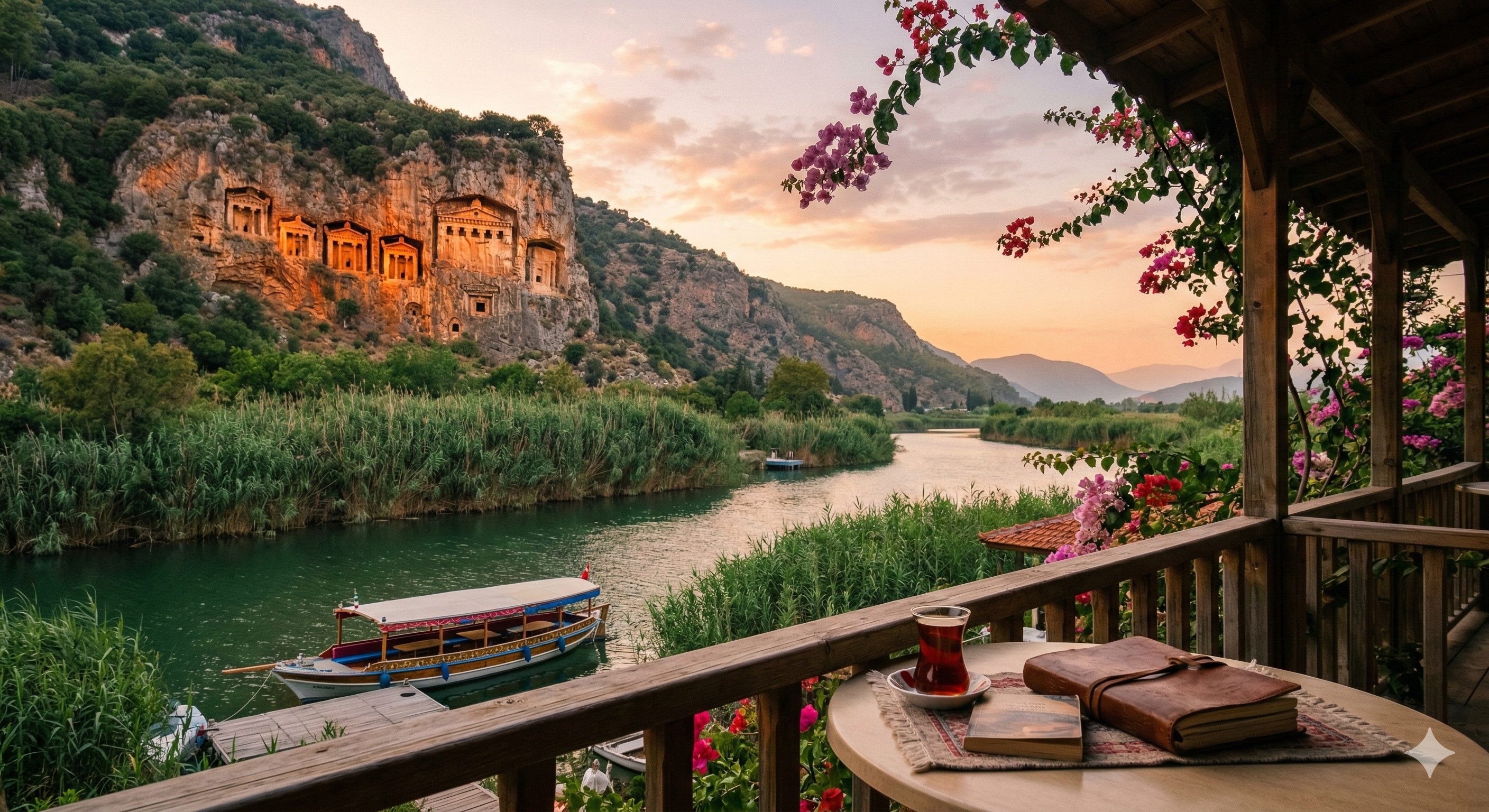
There is a specific kind of magic that happens when you step away from the heavily trodden path of the Turkish Riviera and venture into the lush, green embrace of Muğla province. While the glittering resort towns of Bodrum and Antalya boast endless stretches of all-inclusive beaches, I was searching for something different. I wanted a place that possessed a pulse, a history, and a soul. I found all of that, and so much more, in Dalyan.
Nestled inland on the banks of a winding, emerald-green river, Dalyan is not your typical coastal destination. It doesn’t throw itself at you; instead, it slowly reels you in. From the moment I arrived, the scent of wild pine, sweet citrus, and the faint, earthy tang of river water told me I had discovered one of Turkey’s best-kept secrets. If you are looking for an encyclopedic breakdown of coordinates and opening hours, you won’t find it here. This is the story of how a small river town captured my heart, and why you need to pack your bags and experience it for yourself.
Waking Up by the River: Finding Your Sanctuary
When I was first planning my escape to this corner of the Aegean region, I spent hours poring over maps and reviews. I knew that choosing the right dalyan hotel would make or break the experience. I didn’t want a massive, soulless concrete block; I wanted a place that echoed the rhythm of the town itself.
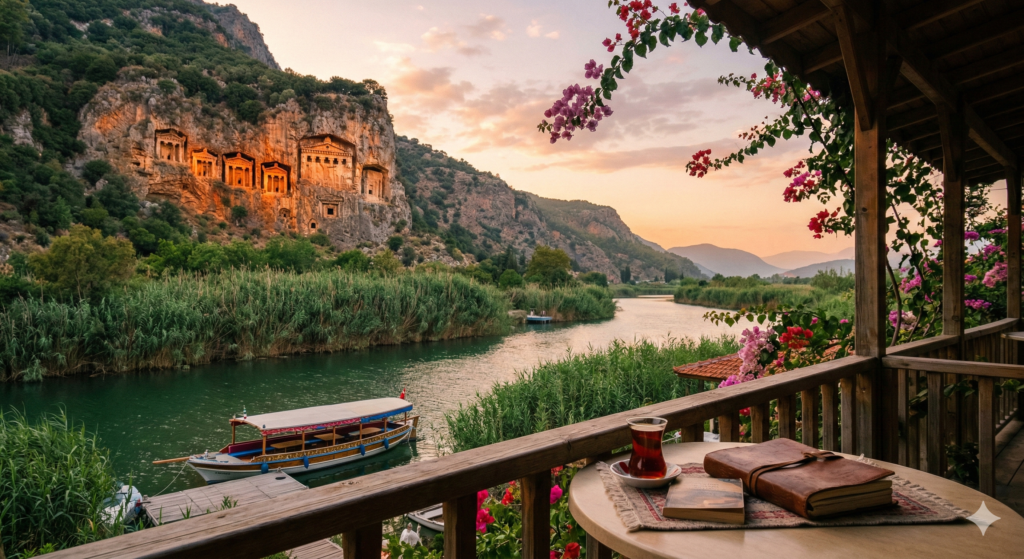
Dalyan’s accommodations are wonderfully intimate. The town is dotted with family-run pensions, boutique guesthouses overflowing with bougainvillea, and charming riverside retreats. I eventually settled on a small, locally-owned spot right on the riverbank. Waking up there was a revelation. Before the town fully awoke, I would sit on my wooden balcony with a glass of strong, black Turkish tea in hand, watching the morning mist roll off the reeds. The only sounds were the soft quacking of ducks, the gentle lapping of the water against the wooden docks, and the distant, rhythmic put-put-put of the first riverboats of the day.
Whether you choose a luxury boutique option with a pristine pool or a humble bed-and-breakfast tucked away in a lemon grove, making sure your chosen dalyan hotel offers easy access to the river is the single best piece of advice I can give you. The river is the absolute lifeblood of this town; it is the highway, the entertainment, and the scenery all rolled into one.
The Gaze of the Lycian Kings
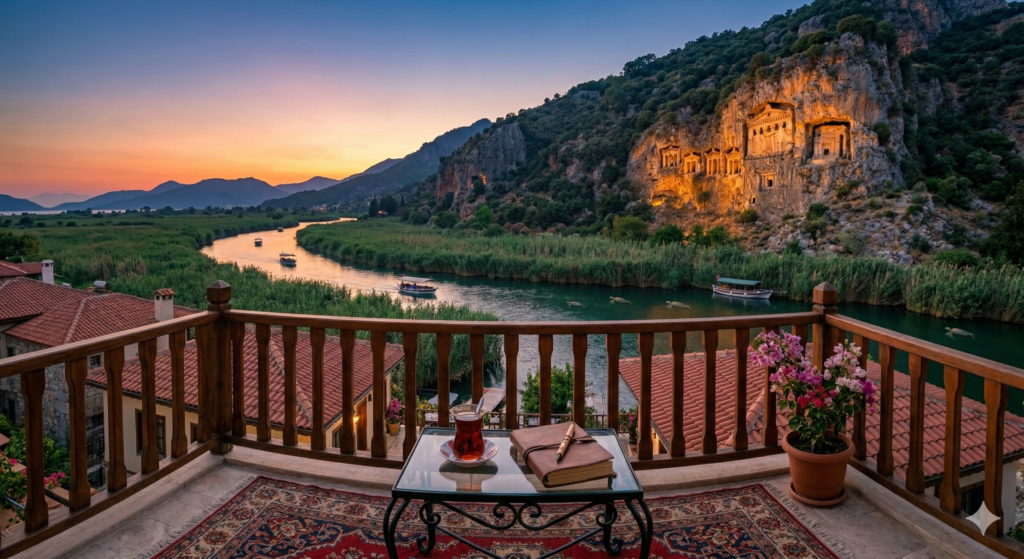
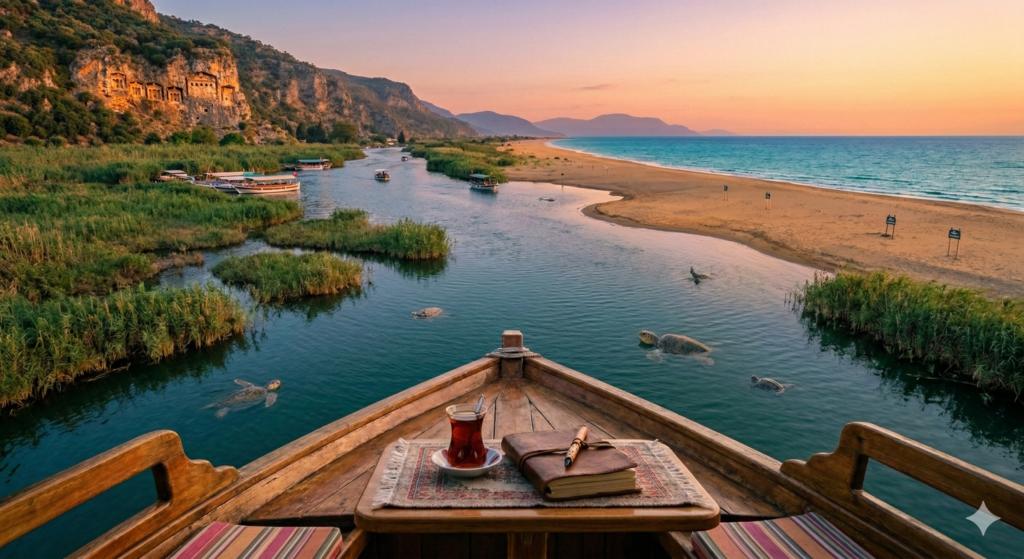
You cannot speak of Dalyan without speaking of the ghosts that watch over it. Walk down to the town’s promenade at any time of day, look across the water, and prepare to have your breath stolen. Carved directly into the sheer, golden-hued cliff faces on the opposite side of the river are the Kaunos Rock Tombs.
Dating back to the 4th century BC, these elaborate temple-like facades were created by the Lycians to house their dead kings and nobility. The Lycians believed that a winged creature would carry the dead into the afterlife, so the higher the tomb, the better. Seeing them in photographs does not prepare you for their immense scale. I found myself sitting at a riverside cafe for hours, just staring at them. But the true magic happens at golden hour. As the sun begins to set, the ancient stone catches the light, glowing intensely orange and red against the darkening sky. It is a profound, humbling reminder of the ancient civilizations that once called this lush delta home.
Cruising the Labyrinth to Iztuzu Beach
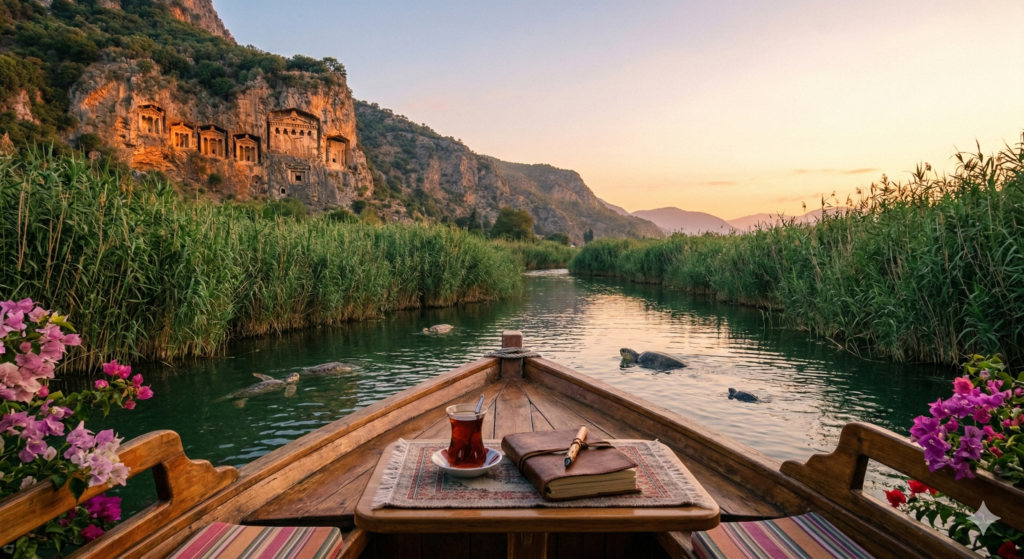
To get to the sea from Dalyan, you don’t take a bus. You take a boat. And let me tell you, this isn’t just a commute; it is one of the most serene journeys you will ever take. I hopped onto a brightly painted wooden riverboat, the captain greeting me with a warm, sun-weathered smile.
For 45 minutes, we meandered through a spectacular, twisting maze of tall, green reeds. The water shifted from river-green to a deep, crystalline blue as we neared the coast. It felt like drifting through a cinematic dreamscape, reminiscent of The African Queen, but with the distant outline of the Taurus Mountains framing the horizon.
Eventually, the labyrinth opens up, revealing Iztuzu Beach. This isn’t just any beach. It is a spectacular 4.5-kilometer-long sandbar that forms a natural barrier between the fresh water of the Dalyan River and the salty waves of the Mediterranean Sea. The sand is incredibly fine and golden, the water perfectly warm.
But Iztuzu is famous for something far more important than sunbathing. It is one of the most vital nesting grounds in the Mediterranean for the endangered Caretta caretta (loggerhead sea turtle).
A Brush with the Ancients of the Sea
Thanks to fierce conservation efforts in the 1980s (which thankfully prevented a massive hotel complex from destroying the beach), Iztuzu remains a protected sanctuary. Wooden stakes mark the nests in the sand, ensuring visitors don’t disturb the incubating eggs.
During my visit, I spent time at the Sea Turtle Rescue Centre located at one end of the beach. Seeing these majestic, prehistoric creatures up close—some recovering from boat propeller injuries or swallowing fishing lines—was deeply moving. It added a layer of profound respect to my beach day. You aren’t just a tourist here; you are a guest in the home of a species that has been swimming in these waters for millions of years.
Mud, Myths, and Mineral Springs
No trip to Dalyan is complete without embracing your inner child and getting phenomenally dirty. Just a short boat ride upriver from the town center are the famous Dalyan mud baths and thermal springs. Legend has it that Cleopatra herself used to bathe in this very mud to maintain her legendary beauty. Whether you believe the myth or not, the experience is pure, unadulterated fun.
I stripped down to my swimsuit, waded into a shallow pool, and proceeded to slather myself from head to toe in thick, grey, sulfur-scented mud. The ritual dictates that you must then stand in the bright Aegean sun, striking ridiculous poses with your fellow travelers, until the mud cracks and dries tight against your skin. Once you look entirely like a swamp monster, you wash it all off under cold showers before sinking into the glorious, 39°C (102°F) thermal pool.
I don’t know if it took ten years off my face as the locals cheekily promised, but as I floated in the warm, mineral-rich water, every ounce of travel fatigue melted away into the river breeze.
Stepping Back in Time at Kaunos
For those who love history, Dalyan offers a tactile connection to the past that goes beyond looking at tombs across the water. One morning, I paid a few Lira to a lovely older woman who rowed me across the river in a tiny wooden skiff. From there, it was a fragrant, 15-minute hike up a dirt path lined with wild fig and pomegranate trees to the ancient ruined city of Kaunos.
Kaunos was once a thriving Carian and Lycian port city, bustling with merchants and sailors. Today, it is a remarkably uncrowded archaeological wonder. I wandered through the remains of a Roman bathhouse, traced the outline of a Byzantine basilica, and stood in the center of a magnificently preserved Hellenistic amphitheater. Sitting on the top tier of the stone seating, I looked out over the ancient harbor—now silted up and transformed into the reed delta we navigated earlier. The silence up there was absolute, save for the wind rustling the olive trees. It felt as though I had the entire ancient world entirely to myself.
Culinary Nights by the Water’s Edge
As day turns to dusk, Dalyan transforms. The heat of the day dissipates, replaced by a cool, comfortable breeze. Fairy lights string up in the trees, and the riverside promenade comes alive with the clinking of glasses and the low hum of relaxed conversation.
Turkish cuisine is world-renowned, but dining in Dalyan has its own unique flair. The absolute must-try local delicacy is the blue crab, caught fresh from the delta. I spent my last evening at a table right on the water’s edge. I feasted on a sprawling spread of meze—creamy haydari, smoky roasted eggplant, and spicy ezme—followed by grilled blue crab that was so sweet and tender it barely needed a squeeze of lemon. Paired with a glass of chilled, anise-flavored Rakı (often called “lion’s milk” by the locals), it was a meal I will remember for the rest of my life.
As I sat there, watching the illuminated rock tombs reflected in the dark, rippling water of the river, I realized why people return to Dalyan year after year.
The Takeaway
Dalyan is not a place you visit just to check a box on a travel itinerary. It is a place you go to exhale. It is a town that balances the profound weight of ancient history with the lighthearted joy of sun-drenched boat rides and mud baths. It is a place where nature is fiercely protected, where the locals treat you like an old friend, and where the river dictates the wonderfully slow pace of life.
If you are craving a Turkish getaway that speaks to the soul, bypass the crowded mega-resorts. Book that cozy dalyan hotel, pack a good book, and let the whispers of the reed delta wash over you. I promise you, a piece of your heart will stay behind in the mud and the ancient stones, waiting for you to return.
Quick Tips for Your Dalyan Adventure:
- Best Time to Visit: May, June, September, and October offer the best balance of glorious, warm weather and fewer crowds. July and August are beautiful but can be intensely hot.
- Currency & Cash: While cards are widely accepted at restaurants and your accommodation, you will definitely want to carry Turkish Lira for the small rowboat ferries, tips, and buying fresh pomegranate juice from street vendors.
- What to Pack: Sunscreen, a wide-brimmed hat, comfortable walking shoes for the Kaunos ruins, and a dark-colored swimsuit for the mud baths (the sulfur can sometimes stain light fabrics!).
- Getting There: The easiest way to reach Dalyan is to fly into Dalaman Airport (DLM). From there, the town is a very easy and scenic 30-minute taxi or shuttle ride away.
