


Caunos Dalyan : A Comprehensive Evaluation of Antiquity

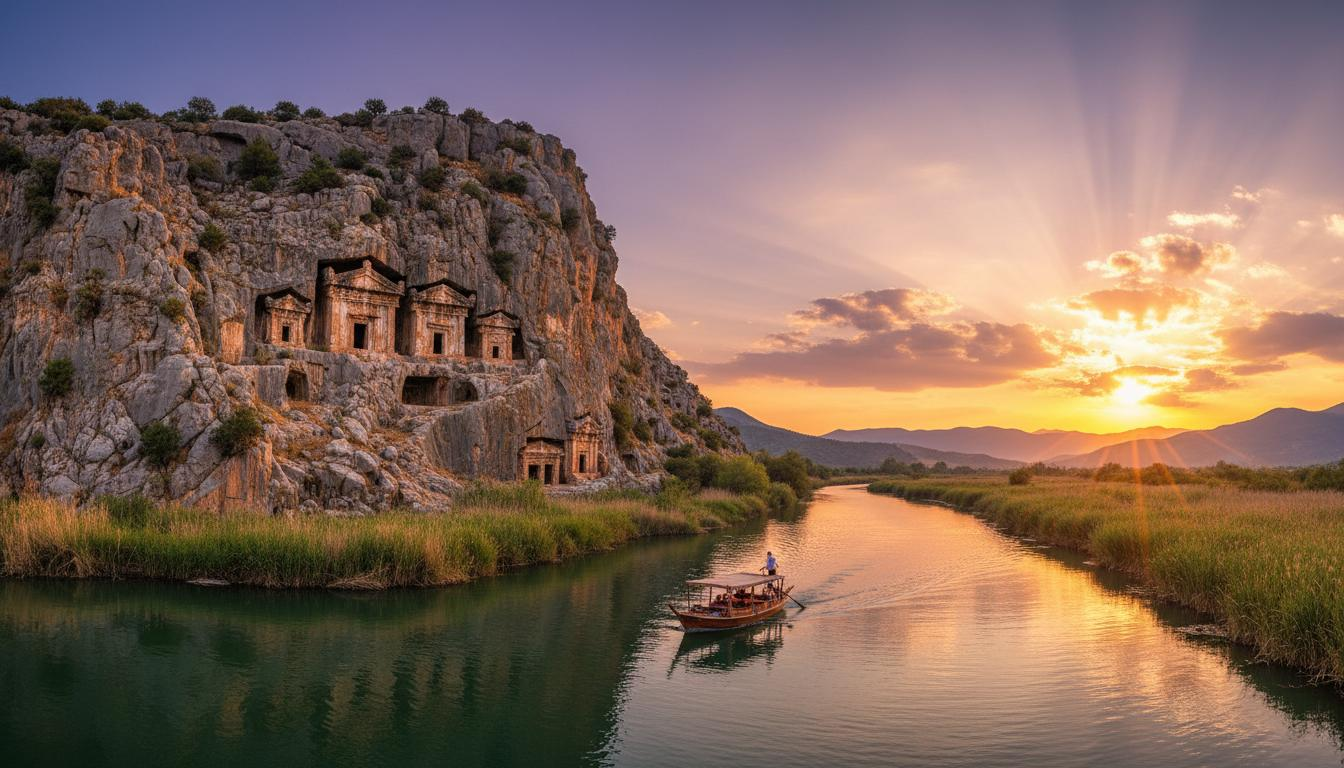
Situated within the Muğla Province on the southwestern coast of the Anatolian peninsula, the Dalyan River basin and the adjacent ruins of the ancient city of Kaunos represent one of the Mediterranean basin’s most intricate and well-preserved intersections of historical antiquity and ecological biodiversity. Unlike the heavily commercialized, high-density tourist hubs of neighboring Marmaris, Bodrum, or Fethiye, the municipality of Dalyan has meticulously cultivated a socio-economic identity deeply rooted in the international Cittaslow (Slow City) movement. This deliberate urban planning philosophy prioritizes the holistic well-being of local residents, the rigorous preservation of indigenous natural resources, and the promotion of a highly sustainable, slow-paced tourism model that actively resists the destructive forces of hyper-development.
The defining geographical feature of this entire region is the meandering Dalyan River—historically recognized in classical antiquity as the Calbis River—which serves as a vital hydrological and ecological artery connecting the expansive freshwater reservoir of Lake Köyceğiz to the saline waters of the Mediterranean Sea, culminating at the legendary İztuzu Beach. This unique aquatic corridor has fostered a dynamic wetland environment where millennia of human civilization are inextricably layered upon a fragile, thriving ecosystem. From the sheer limestone cliffs of Baliklar Mountain adorned with monumental Carian rock-cut tombs to the sulfurous thermal springs bubbling with mineral-rich therapeutic waters, the region offers a multifaceted tapestry that demands rigorous evaluation.
The survival of this landscape in its relatively pristine, untouched state is not merely a fortuitous accident of remote geography; rather, it is the direct consequence of fierce, internationally supported environmental activism that successfully halted mass resort development in the late twentieth century. Consequently, the officially designated Köyceğiz-Dalyan Special Environmental Protection Area (SEPA) stands today as a global paradigm and an essential case study in demonstrating how heritage tourism and uncompromising ecological conservation can mutually reinforce one another. This exhaustive report delineates the mythological, archaeological, linguistic, ecological, gastronomic, and logistical dimensions of the Kaunos-Dalyan region, providing a nuanced, comprehensive evaluation of its enduring significance.
The Mythological Bedrock: The Tragedy of Byblis, Caunus, and the Genesis of the Calbis River
To comprehensively understand the cultural resonance and the spiritual landscape of the Dalyan River basin, one must first examine the mythological framework that ancient civilizations constructed to explain the existence of its physical geography. In classical antiquity, topographical anomalies were rarely viewed as mere geological formations; they were interpreted as the physical manifestations of divine intervention or monumental human tragedy. According to classical mythology, most heavily detailed and popularized in the Roman poet Ovid’s Metamorphoses, the foundation of the city of Kaunos is inextricably linked to a harrowing narrative of forbidden passion, exile, and unending grief.
The city was purportedly founded by King Caunus (Kaunos), a figure of divine lineage. Caunus was the son of Miletus—who was himself the son of the sun god Apollo and the nymph Deione—and the water nymph Cyanee, daughter of the meandering river god Maeander. Other regional mythological variants suggest his mother was Eidothea, the daughter of the Carian king Eurytus. Caunus possessed a twin sister named Byblis, who, as they matured, developed an obsessive, deeply incestuous passion for her twin brother. Ovid’s psychological portrait of Byblis illustrates her profound internal turmoil; she initially disguised her affections under the veil of acceptable sisterly love, but gradually her desires morphed into an uncontrollable romantic obsession, leading her to harbor intense jealousy toward any other women who captured her brother’s attention.
Unable to contain her illicit desires, Byblis ultimately confessed her love through a long, desperate letter delivered by a servant, citing mythological precedents of endogamy among the Olympian gods to justify her feelings. Upon receiving this confession, Caunus was utterly repulsed and disgusted. To escape his sister’s advances and avoid the moral stain of her affection, he immediately fled his homeland alongside a contingent of loyal followers. He sailed across the Aegean Sea to the southwestern coast of Anatolia, where he established a completely new settlement, naming the city Kaunos after himself.
Driven to absolute madness by her brother’s unequivocal rejection and subsequent disappearance, Byblis tore her garments, stripped herself naked in sorrow, and wandered frantically through the rugged terrains of Greece, Caria, and Lycia in a desperate, fruitless search for him. Exhausted by the physical toll of her monumental journey and completely consumed by the psychological weight of her grief, she eventually collapsed near the newly founded city of Kaunos. The copious, unrelenting tears she wept in her absolute despair caught the sympathetic attention of the local Naiad and Hamadryad nymphs. To immortalize her sorrow, the nymphs transformed the dying Byblis into a perpetual, weeping spring. In local Anatolian lore, this mythological spring gave rise to the Calbis River, which is known today as the Dalyan River.
This foundational myth serves a dual purpose in the historical evaluation of the region. First, it imbues the physical landscape with a profound sense of poetic melancholy, transforming the meandering river into an eternal monument of unrequited love. Second, it reflects the ancient Hellenic and Carian traditions of anchoring their urban settlements in divine or heroic genealogies, thereby establishing the geopolitical legitimacy of Kaunos through its direct connection to Apollo and the royal lineage of Miletus.
The Geopolitical and Historical Evolution of Ancient Kaunos
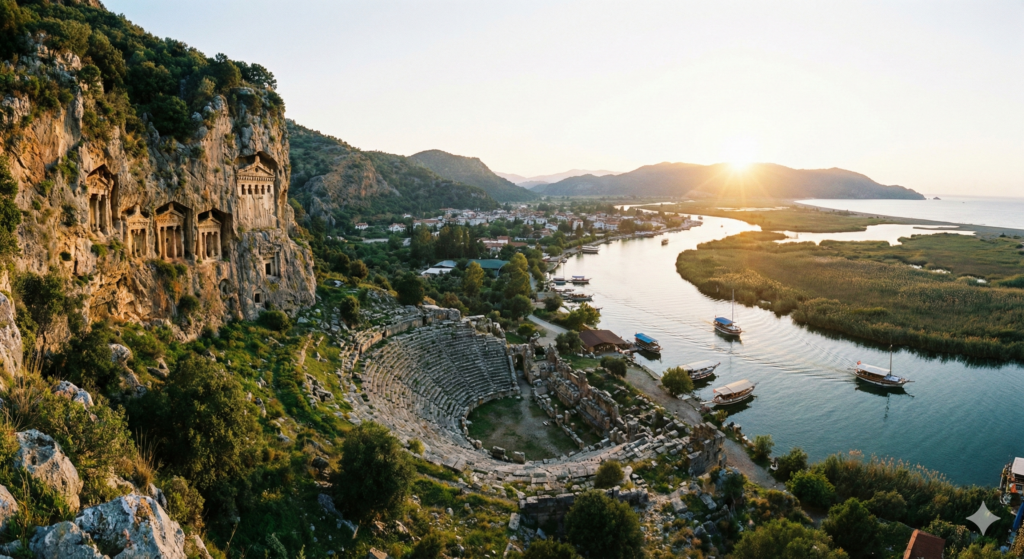
Moving beyond the realm of myth, the archaeological reality of the Kaunos site provides a profound chronological record that spans over three millennia, capturing the complex architectural, linguistic, and cultural transitions of the Carian, Hellenic, Roman, and Byzantine epochs. Originally situated directly on the Mediterranean coastline, the city functioned as a highly strategic, prosperous trading port that dominated regional maritime commerce. However, the very river that brought trade to its docks ultimately altered its destiny. Centuries of alluvial silt steadily deposited by the Calbis (Dalyan) River gradually pushed the coastline outward into the sea. This relentless geological process transformed the ancient harbor into a reed-choked wetland, leaving the ruins of the once-great maritime hub stranded several miles inland today.
Geopolitical Dynamics of the Carian-Lycian Borderlands
The geopolitical significance of Kaunos was largely dictated by its unique geographical positioning on the highly contested borderlands between the distinct cultural regions of Caria to the northwest and Lycia to the southeast. This liminal geography resulted in a complex cultural synthesis, where the interaction between these contemporary, neighboring civilizations was absolutely inevitable. The tangible outcomes of this cross-cultural interaction are visibly manifested throughout the city’s surviving architecture, burial practices, and daily life.
The extensive independent state boundaries of Kaunos, commonly referred to as the ‘Kaunos Region’ or ‘Kaunosia’, have been meticulously defined by historical scholars, most notably the Swedish archaeologist P. Roos. According to these archaeological definitions, the sovereign territory of Kaunos started from the Gulf of Fethiye and the ancient city of Krya in the south, extending eastward toward Tlos, and stretching westward to the Gulf of Gokova and the city of Idyma. In a modern geographical context, this vast coastal area encompassed the southern plains of Muğla and extended deep into the formidable mountain ranges separating Muğla from Antalya.
Historically, the citizens of Kaunos demonstrated a fierce, unwavering inclination toward political independence. The city successfully maintained these expansive sovereign borders until the catastrophic Persian invasion of Anatolia in the mid-4th century BC. Alongside the Lycian city of Xanthos, Kaunos was one of the few urban centers to vehemently and violently resist Persian subjugation. When military resistance proved futile, the pragmatic Kaunians often opted to pay exorbitant financial tributes and high taxes to larger prevailing empires—including the Persians, the Delian League, and later the Romans—merely to maintain their functional autonomy as an independent, wealth-generating port city.
Linguistic Enigmas: Epigraphy and the Kaunosian Dialect
The historical distinctiveness of Kaunos is perhaps most powerfully underscored by the linguistic anomalies discovered at the site. The historical records of the Greek historian Herodotus explicitly note that while the Kaunians shared many physical similarities and customs with the Carians, their language possessed distinct, highly localized idiosyncrasies. Herodotus mused over whether the Kaunians influenced the Carians or vice versa, highlighting a historical debate about their true ethnic origins that persisted for centuries.
Linguistic evidence unearthed during modern excavations has confirmed Herodotus’s observations. In the epigraphic records of ancient Lycian scripts, the city of Kaunos was frequently referred to as Kbid or Khbide, while in other neighboring dialects it was known as Ksibde; the Greeks, conversely, formalized the name as Καῦνος (Kaunos). The local population utilized a highly specific variant of the Carian alphabet, which modern linguists have categorized within the Luwic group of the broader Anatolian language family, indicating a close evolutionary relationship with the Lydian language.
For decades, the Carian language remained entirely undeciphered, presenting a massive obstacle to historians attempting to understand the indigenous cultures of southwestern Anatolia. The breakthrough in decipherment was achieved through the application of combinatory, contextual, and etymological analytical methods, heavily reliant on the discovery of epigraphic materials at Kaunos itself. Specifically, the excavation of a highly significant bilingual stele—inscribed in both classical Greek and the indigenous Carian script—provided the Rosetta Stone equivalent needed to unlock the language. Although this bilingual text was a highly formalized honorary decree, which inherently limited the range of vocabulary it provided, it offered the crucial comparative data required to establish phonetic values for Carian symbols.
Furthermore, epigraphic analysis of the Kaunosian script revealed the presence of five distinct alphabetical letters that are completely absent from the standard Carian alphabet found in other regional settlements. This unique orthography proves that the Kaunosian language was a highly localized dialect, uniquely adapted to the specific cultural and phonetic needs of the city’s inhabitants, further cementing their status as a distinct micro-civilization within the broader Anatolian landscape.
| Language / Script | Designation for the City | Significance in Epigraphic Studies |
| Ancient Greek | Καῦνος (Kaunos) | Provided the known textual baseline in the bilingual steles used for decipherment. |
| Lycian | Kbid / Khbide | Demonstrates the cross-border interaction and how neighboring cultures identified the city. |
| Carian (Standard) | Ksibde | The broader regional language belonging to the Luwic group of Anatolian languages. |
| Kaunosian Dialect | (Utilized unique alphabet) | Contained 5 unique letters not found in standard Carian, proving a distinct, localized linguistic evolution. |
Architectural Stratigraphy: The Unearthed Monuments of Kaunos
The physical, archaeological remnants of Kaunos reflect a wealthy, cosmopolitan society capable of monumental civic engineering. The site has been subject to continuous, systematic excavation since 1966, revealing a sprawling urban layout that requires considerable physical stamina to fully traverse today, as the ruins stretch across terraced acropolises and deep valleys. The oldest tangible finds at the site—specifically the neck of a Protogeometric amphora—date back to the 9th century BC or earlier, proving the antiquity of the settlement. However, the most visible architectural triumphs date from the massive civic expansion of the 4th century BC through the Byzantine era.
The Defensive Infrastructure and Civic Core
The defense of the wealthy port city was paramount. The city walls of Kaunos are universally recognized as masterpieces of ancient military architecture. Dating predominantly to the Hellenistic period, these massive fortifications expand up to 4 meters in width in certain sections. They were constructed utilizing a highly sophisticated polygonal stone-masonry technique, wherein giant, meticulously sculpted stone blocks were seamlessly intertwined and fitted together without the use of any mortar. This structural flexibility allowed the walls to withstand the frequent seismic activity inherent to the Anatolian fault lines, a testament to the advanced building technology of the era, recognized specifically under UNESCO Criterion (i) and (iii).
At the heart of the city’s civic life lies the grand amphitheater, a remarkably well-preserved structure that physically embodies the architectural transition of the city. The theater’s seating arrangements and foundational layout display distinct Hellenistic features, yet it contains heavy Roman modifications to the stage and orchestra areas, indicating continuous, evolving civic use across different imperial eras.
Sacred Spaces: The Stratification of Religious Authority
The religious architecture of Kaunos provides a fascinating glimpse into how incoming cultures co-opted the spiritual authority of indigenous populations. During the excavations, archaeologists uncovered six distinct temple structures—two of Hellenistic origin and four built during the Roman period. The most visually appealing of these is the 3rd-century BC terrace temple, which faces a striking circle of columns. Inside this sacred circle, excavators found an obelisk. This specific obelisk was the recognized symbol of the mythological founder King Caunus, and its image was proudly minted on ancient Kaunian currency.
Further downhill lies the Roman Temple of Zeus, dating to the 1st century BC. However, the most profound discovery at this specific location lay beneath the Roman foundations. Archaeologists digging 6.5 meters below the surface of the Temple of Zeus discovered an ancient, sacred stone known as a Baitylos. This aniconic stone, dating back to the 5th century BC, was the original, indigenous symbol of the city, representing Baselius Kaunios, the divine god-king of Kaunos. The deliberate placement of the Roman Temple of Zeus directly atop the ancient Carian Baitylos highlights a common imperial practice: the physical stratification of religious sites. By building over the old gods, the Romans integrated local populations into their empire while simultaneously asserting architectural dominance. Furthermore, a later Christian church was also built in this exact vicinity, ensuring that this specific patch of earth remained an uninterrupted epicenter of religious worship throughout the entire history of Kaunos.
Roman Luxury and Byzantine Devotion
As Kaunos integrated into the Pax Romana, the city saw the construction of massive Roman baths. These monumental structures, featuring expansive, soaring stone arches, are considered some of the best-preserved examples of imperial bathing complexes in the region, designed to frame the breathtaking Anatolian landscape while providing luxurious social hubs for the citizenry.
The final major architectural phase of the city is represented by the Domed Byzantine Basilica, located on the palaestra terrace and dating to the 5th or 6th century AD. This impressive church was constructed utilizing spolia—recycled building materials taken from earlier, ruined classical buildings—and sits upon the foundation of a 4th-century structure that was likely an earlier place of worship. The basilica is the only remaining Byzantine edifice in Kaunos that still stands completely upright. Its inner walls were originally plastered and richly decorated with religious frescoes, while the floors immediately adjacent to the basilica boast wonderfully intact, intricate mosaic designs that can still be viewed from surrounding elevated platforms today.
| Structure | Era of Construction | Architectural Details & Historical Significance |
| City Walls | Hellenistic (4th Cent. BC) | Mortarless, intertwined polygonal masonry up to 4 meters thick; highly resilient to seismic activity. |
| Amphitheater | Hellenistic / Roman | Blends Greek seating with Roman stage modifications; indicative of continuous civic engagement across empires. |
| Temple of Zeus / Baitylos | Carian (5th Cent. BC) & Roman (1st Cent. BC) | A Roman temple built directly over a 6.5m deep indigenous sacred stone (Baitylos) representing the god-king Baselius Kaunios; exemplifies religious stratification. |
| Roman Baths | Roman Imperial | Massive stone arches overlooking the delta; a hub of luxury and socialization for the elite. |
| Domed Basilica | Byzantine (5th – 6th Cent. AD) | Built using recycled classical materials (spolia) over older religious foundations; features highly intricate, surviving floor mosaics. |
The Necropolis: Morphological Analysis of the Kaunosian Rock-Cut Tombs
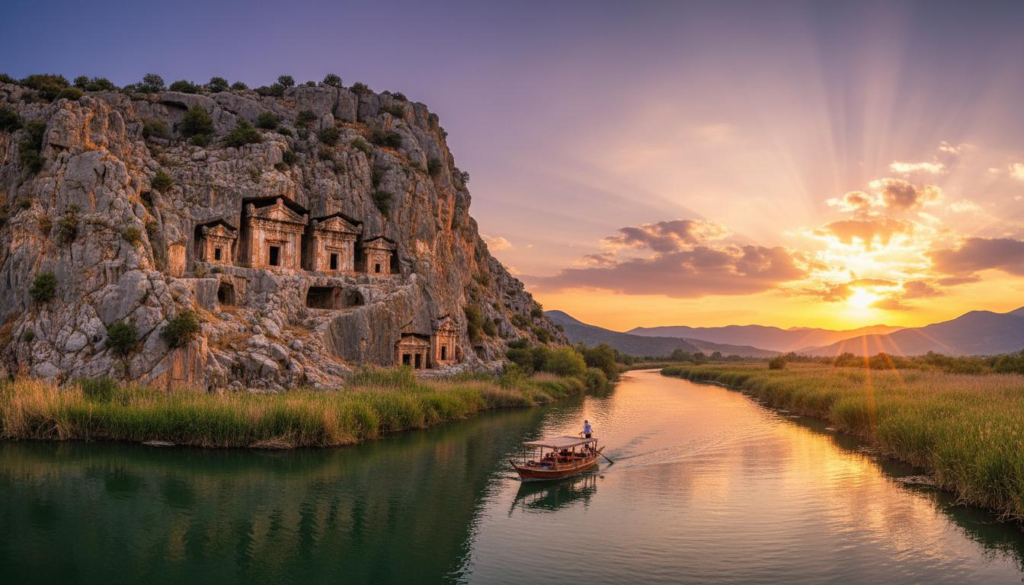
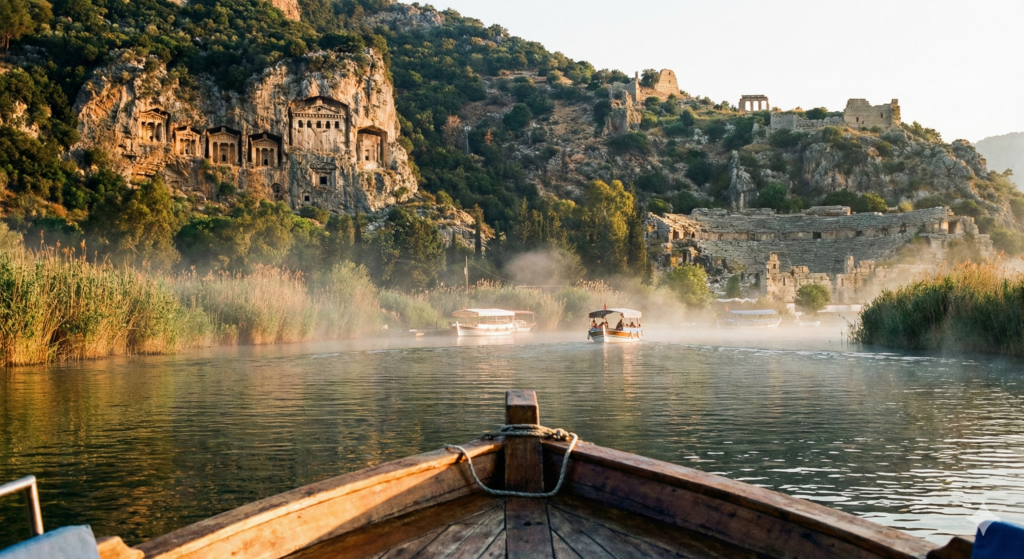
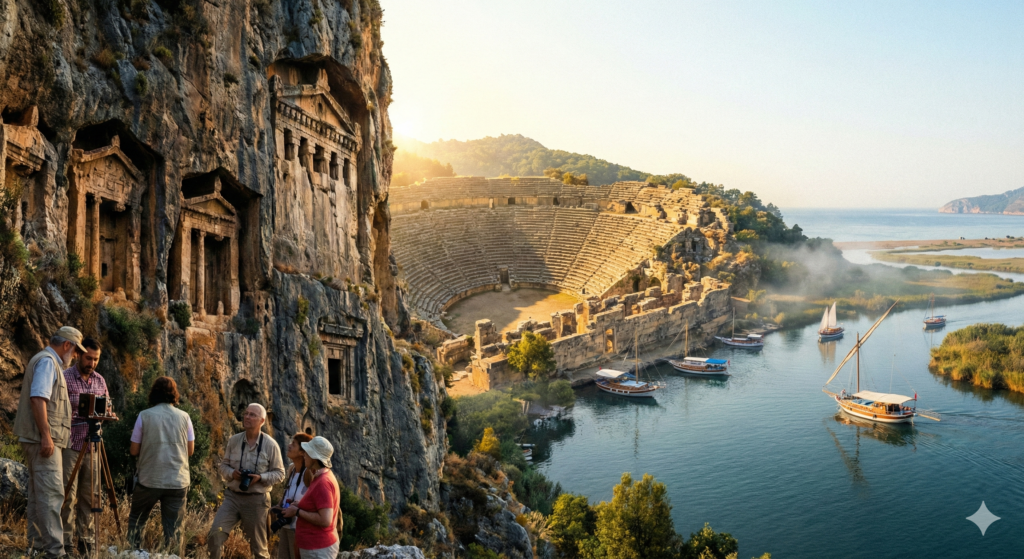
While the city ruins are expansive, the most globally recognized and photographed features of the entire Dalyan region are the spectacular rock-cut tombs. Situated just outside the official boundaries of the main Kaunos archaeological site, these monumental sepulchers are carved directly into the sheer, vertical limestone facades of Baliklar Mountain, towering ominously yet beautifully over the winding Dalyan River below.
Dating primarily from the 4th to the 2nd century BC, these elaborate resting places were constructed specifically for the Kaunian royalty and high-ranking elite. There are approximately 167 documented tombs grouped into seven different areas along the southwest face of the mountain. However, the most significant and awe-inspiring among these are the six “Temple-Faceted” tombs.
These specific facades were meticulously engineered to mirror the frontages of classical Hellenistic temples. The stone carvers replicated twin Ionian pillars, grand triangular pediments, architraves adorned with intricate toothed friezes, and decorative acroterions shaped elegantly like palm leaves. This specific architectural typology—blending the solemnity of a burial site with the grandeur of a temple for the gods—is utterly unique to this localized region, earning the official academic designation of “Kaunosian Style Rock-Cut Tombs” (recognized under UNESCO Criterion iv).
The structural layout of these tombs differs significantly from other famous rock-cut necropolises found across the ancient world. For instance, whereas the famed tombs of the Nabataeans in Petra utilize different spatial arrangements, the Kaunian tombs mimic multi-story, high-density apartment blocks rising vertically up the precipitous rock face. This brilliant architectural innovation originated strictly in the heart of Kaunos before slowly expanding outward through cultural transmission. By the mid-fourth century BC, the Kaunosian style began heavily influencing the burial architectures of neighboring Lycian communities to the south and east, a cultural exportation most visibly evidenced today by the famous Tomb of Amyntas in the nearby coastal town of Fethiye.
Today, these tombs represent a profound, beautiful interaction between human artistic endeavor and formidable geological reality. However, because they are carved into relatively soft limestone, they remain highly vulnerable to the region’s harsh climatic conditions and geological erosion, with some facades actively fragmenting and slowly dissolving into the river basin below.
The Ecological Sanctuary: The Dalyan Delta and Marine Conservation
Beyond its staggering historical ruins, Dalyan is globally revered as a paramount ecological sanctuary. The geography of the Dalyan Delta forms a vast, UNESCO-protected wetland—a complex, ever-shifting labyrinth of tall reed beds, meandering estuarine channels, and shallow, brackish lagoons that stretch from the freshwater source of Lake Köyceğiz out to the Mediterranean Sea. This unique topography acts as a critical ecological corridor, providing an irreplaceable global habitat for a multitude of rare, native, and migratory species.
İztuzu Beach and the Loggerhead Sea Turtles
At the very terminus of the Dalyan River lies İztuzu Beach, a sweeping 4.5-kilometer arc of pristine, compact golden sand that acts as a natural physical barrier separating the freshwater delta from the salty expanse of the Mediterranean. Famously referred to internationally as “Turtle Beach,” İztuzu serves as one of the most vital and successful nesting grounds in the entire Mediterranean basin for the endangered Loggerhead sea turtle, scientifically known as Caretta caretta.
The Caretta caretta is classified as a vulnerable species on the IUCN Red List, and their survival depends heavily on the delicate, uncompromising management of the beach environment. The turtles have utilized this specific stretch of sand for thousands of years. The nesting season spans the warmest months from May to October, with the fragile hatchlings emerging from their underground nests between late August and September.
To aggressively protect the turtles and ensure the highest possible survival rate for the hatchlings, a series of stringent environmental protection measures are enforced. Crucially, all public access to the beach is strictly prohibited during the nighttime hours, specifically between 8:00 PM and 8:00 AM, to prevent any human disturbance during the critical nesting and hatching periods. During the day, identified nests are clearly marked and shielded with protective metal cages to prevent accidental trampling by sunbathers. Furthermore, rigorous regulations strictly prohibit the use of artificial lighting near the nesting areas at night; light pollution is notoriously fatal to hatchlings, as it disorients them, causing them to crawl inland toward artificial lights rather than toward the natural reflection of the moon on the sea.
Environmental Activism: The Legacy of Kaptan June and the Battle for İztuzu
The pristine, uncommercialized state of İztuzu Beach today is not an accident; it is the direct result of one of the most significant and successful environmental battles fought in the late 20th century. In 1987, amidst a nationwide push for rapid coastal tourism development, international developers initiated definitive plans to bulldoze the dunes of İztuzu to construct a massive, highly destructive 1,800-room luxury resort complex.
This catastrophic threat to the fragile ecosystem was met by the fierce, unyielding resistance of June Haimoff. Born in Essex, England, in 1922, Haimoff had lived a varied life as an aspiring opera singer and art gallery owner before settling in a small, rustic beach hut on İztuzu in 1984. Affectionately dubbed “Kaptan June” (Captain June) by the locals, she recognized the impending ecological disaster and spearheaded a relentless international campaign in the pre-internet era to halt the hotel’s construction.
Haimoff strategically sought the aid of high-profile global figures, successfully recruiting fellow environmentalists such as David Bellamy, Lily Venizelos, and Günther Peter. Most notably, she secured the powerful, vocal backing of Prince Philip, who was serving as the President of the World Wildlife Fund (WWF) at the time. This massive international pressure culminated in an unprecedented victory: the Turkish cabinet of ministers declared a moratorium on the resort construction.
In 1988, the government officially established the Köyceğiz-Dalyan Special Environmental Protection Area (SEPA), effectively saving the beach from concrete urbanization forever. Haimoff dedicated the remainder of her long life—she passed away in Dalyan in 2022 at the age of 99—to the cause of conservation. In 2011, she established the Kaptan June Sea Turtle Conservation Foundation, which operates a museum and information center on the beach, promoting environmental education and successfully lobbying for the mandatory installation of propeller guards on local tour boats to prevent horrific injuries to marine life.
Today, this legacy of protection is further institutionalized by DEKAMER (The Sea Turtle Research, Rescue, and Rehabilitation Center). Located directly behind the beach, DEKAMER operates a state-of-the-art veterinary facility dedicated to treating turtles injured by boat strikes, entanglement in fishing nets, or the accidental ingestion of ocean plastics. They also track turtle migration patterns using satellite telemetry, ensuring that İztuzu remains a global beacon for responsible, science-driven marine conservation.
Avian Biodiversity and the Wetland Ecosystem
The legal protection afforded to the delta has allowed it to flourish not just as a marine sanctuary, but as a paramount ornithological paradise. Rigorous biological research indicates that the Dalyan-Köyceğiz aquatic ecosystem acts as a critical habitat for over 150 distinctly identified species of native and migratory birds, spanning across 25 different biological families. The humid conditions, combined with the impenetrable maze of reeds, lotuses, and deep marshes, provide the ideal cover and abundant food sources necessary to sustain this immense biodiversity.
The delta’s strategic location along major transcontinental flyways means it acts as a critical stopover and resting point for massive flocks migrating between Europe, Asia, and Africa during the winter and spring months. Visitors exploring the ruins of Kaunos in the early morning, particularly from vantage points overlooking the Suluklu Golu (Lake of Leeches), are frequently rewarded with spectacular, uninhibited birdwatching opportunities that blend archaeological contemplation with raw ecological observation.
| Avian Classification | Notable Species Observed in the Dalyan Delta | Ecological Significance & Conservation Status |
| Endemic & Resident Species | White-throated Kingfisher, Western Rock Nuthatch, Blue Rock Thrush, Water Rail | The White-throated Kingfisher (Halcyon smyrnensis) is exceptionally rare; it is estimated that only 100-150 breeding pairs remain in the entirety of Turkey, making their presence here highly significant. |
| Transcontinental Migrants | Flamingos, Pelicans, European Shag, Night Heron, Lesser Spotted Eagle, Gull-billed Tern | These wetland-dependent species utilize the protected reed beds for laying eggs, brooding, hatching, or acquiring essential rest during exhausting global migrations. |
| Near-Threatened Populations | Krüper’s Nuthatch, Ferruginous Duck (Fudge Duck), European Roller | The strict anti-urbanization laws of the SEPA prevent the critical habitat loss that threatens these highly specific, vulnerable populations elsewhere in the Mediterranean. |
In addition to its avian residents, the delta’s brackish waters are teeming with unique reptiles. The region is particularly noted for its population of Nile Turtles (Trionyx triunguis), locally referred to as African Softshell Turtles. These fascinating, carnivorous reptiles feature a distinctive snout that functions like a natural snorkel, allowing them to breathe without breaking the surface, and soft, leathery shells that differentiate them entirely from the heavily armored sea turtles nesting on the beach.
The Oriental Sweetgum: Endemic Flora and the Storax Economy
While the fauna of Dalyan commands significant global attention, the Muğla province harbors a lesser-known but equally vital ecological asset: the Oriental Sweetgum tree (Liquidambar orientalis). This deciduous, endemic species is largely restricted to the eastern Mediterranean, forming dense, pure, relic forests almost exclusively in the floodplains of southwestern Turkey and the nearby Greek island of Rhodes. The tree requires a highly specific microclimate to thrive, favoring deep, moist soils, coastal bogs, and river banks at elevations below 400 meters, thriving in the region’s heavy annual rainfall and mild temperatures.
These specific forests, currently designated by the Turkish government as “Strictly Protected Sensitive Areas,” are of massive historical, cultural, and economic importance to the region due to the natural, highly fragrant balsam they produce. The extraction of this valuable balsam—commonly known globally as sweetgum oil, storax, or sığla yağı—is a meticulous, labor-intensive process that relies on ancient agrarian techniques. It involves the deliberate, careful wounding of the tree’s grayish-brown bark to stimulate the collection of the healing sap, a visual process often poetically described in local culture as the tree “weeping tears”.
The historical application of this sap is staggering in its timeline. Archaeological and textual evidence suggests that ancient Phoenician merchants traded the oil extensively across the Mediterranean, while the ancient Egyptians imported vast quantities of it to utilize as a highly effective preservative in their complex mummification processes. Today, the extracted oil remains a highly valuable export commodity, selling for premium prices globally.
Chemically, the oil consists of potent organic compounds such as cinnamic acid, styracin, styrol, and storesinol. It serves as a critical fixative in the global perfumery and high-end cosmetics industries, helping to stabilize volatile fragrances. Medically, it has been utilized for centuries in traditional Anatolian remedies to treat severe stomach ulcers and upper respiratory illnesses like asthma and bronchitis. Externally, it acts as a powerful antiseptic and parasiticide, commonly used to treat severe skin disorders such as scabies and stubborn fungal infections. Furthermore, contemporary scientific research highlights the potential of sweetgum extracts as highly effective, environmentally friendly agricultural pesticides, capable of naturally reducing destructive nematode and mosquito populations without resorting to toxic, synthetic chemicals. After the oil is fully extracted, the remaining dried bark (frankincense) is burned as a fragrant incense in local mosques and churches, ensuring that absolutely every part of the tree is utilized. The aggressive conservation of these sweetgum forests is therefore absolutely essential, not merely for maintaining regional biodiversity, but for the continuation of a highly localized, millennia-old agrarian economy that sustains rural populations.
Geothermal Wellness: The Sultaniye Hot Springs and Antiquity’s Spa Culture
A short, highly scenic boat ride from the center of Dalyan, nestled near the southern shores of the expansive Lake Köyceğiz, lies a geological feature that has continuously drawn health-seekers and elites since the 2nd century BC: the famous Sultaniye Hot Springs. Positioned directly atop an active tectonic fault line, these thermal baths represent the uninterrupted continuation of an ancient Roman and Hellenistic spa culture that deeply valued the Earth’s geothermal heat for its profound restorative and medical properties.
The waters at the Sultaniye complex maintain a constant, soothing, naturally regulated temperature of approximately 36°C (97°F) year-round. Far from relying merely on placebo effects or ancient superstition, modern scientific water analysis has definitively verified the healing qualities of these specific springs. The thermal waters are highly concentrated with a potent mixture of essential minerals, predominantly featuring bicarbonate, calcium, and sulfate. They also contain high levels of carbon dioxide, trace amounts of iron, and naturally occurring, mild radioactive alpha particles. This highly unique, effervescent chemical composition has earned the springs the moniker “champagne water,” as the carbon dioxide constantly bubbles up through the mud and water, gently aerating the skin.
Visitors traditionally cover themselves head-to-toe in the thick, sulfurous mud extracted from the basin, allowing it to dry in the Mediterranean sun before washing it off in the thermal pools. This ritual is scientifically and anecdotally renowned for treating a vast multitude of debilitating conditions. The high mineral and sulfur content provides immense relief for patients suffering from rheumatoid arthritis, joint pain, kidney ailments, urinary tract disorders, and various dermatological diseases. It is also highly prescribed by traditional practitioners for alleviating mental fatigue, nervous system disorders, and metabolic issues.
The springs are deeply steeped in alluring regional folklore. The most prominent legend asserts that Cleopatra VII, the legendary Ptolemaic Queen of Egypt, personally visited these specific baths during her voyages across the Mediterranean, attributing her renowned, flawless beauty and radiant skin directly to the therapeutic properties of the Dalyan mud and thermal waters. While rigorous historical and epigraphic evidence placing Cleopatra at Sultaniye (or the nearby pools of Pamukkale) remains elusive, historians argue that the persistence of the “Cleopatra’s Pool” mythology is culturally significant. It serves to symbolically highlight the perceived luxury, elegance, and divine healing qualities that the ancient world associated with the region’s geothermal activity. Over the subsequent centuries, the site has continued to attract a steady stream of high-profile, wealthy visitors, further cementing its reputation as one of the premier natural wellness destinations in the Mediterranean.
| Mineral / Element Present | Proven & Traditional Therapeutic Benefits at Sultaniye Hot Springs |
| Sulfur / Sulfates | Highly effective in treating severe dermatological conditions, fungal infections, and soothing skin irritations. |
| Calcium & Bicarbonate | Supports cardiovascular and circulatory health; aids in metabolic regulation and joint mobility. |
| Carbon Dioxide | Creates the “champagne water” effect; stimulates blood flow to the skin and provides mental relaxation/relief from nervous fatigue. |
| Radioactive Alpha Particles | Trace amounts used in traditional balneotherapy to provide deep, penetrating relief for chronic rheumatoid arthritis and severe joint pain. |
Gastronomy and Agrarian Heritage: From Blue Crabs to Pomegranates
The culinary landscape of the Dalyan region is a direct, vibrant reflection of its incredibly rich aquatic ecosystems and fertile agrarian surroundings. The town’s gastronomy is deeply anchored in the traditional Mediterranean diet, placing an uncompromising emphasis on the daily catch of fresh seafood, seasonal, locally farmed vegetables, cold-pressed artisanal olive oils, and sun-ripened citrus fruits.
The Blue Crab: A Culinary and Cultural Emblem
If one specific ingredient defines the modern, highly experiential Dalyan culinary scene, it is undeniably the Blue Crab (Callinectes sapidus). These aggressive, vividly colored crustaceans thrive abundantly in the brackish, nutrient-dense waters of the river delta and have become a foundational pillar of the local culinary economy.
The consumption of blue crab in Dalyan is rarely restricted to formal dining rooms; rather, it is highly experiential and interactive. A multitude of guided riverboat tours regularly take enthusiastic visitors deep into the labyrinthine channels of the delta to observe or actively participate in traditional crab fishing alongside local experts. Following a successful catch, the crabs are frequently prepared and grilled directly on the wooden decks of the boats over an open charcoal flame, offering a deeply authentic, messy, and memorable “tide-to-table” experience. While traditional preparation favors this simple, rustic grilling to highlight the sweet, delicate meat, higher-end local restaurants and chefs also prepare incredibly elaborate crab cakes or serve the chilled crab meat alongside complex regional meze platters, ensuring the ingredient is elevated to gourmet standards.
Orchards and Pomegranate Production
The highly fertile, alluvial soils surrounding the town of Dalyan and the shores of Lake Köyceğiz are heavily cultivated with sprawling, fragrant groves of lemons, oranges, olives, and, most notably, pomegranates (nar). During the late summer and autumn harvests, the entire region is flush with this ruby-red, antioxidant-rich fruit.
Locals are experts at processing the massive pomegranate harvest into a wide variety of artisanal, health-focused products. Freshly squeezed, vibrant pomegranate juice (nar suyu) is absolutely ubiquitous throughout the town, sold by street-side vendors and at all local markets, celebrated by locals and tourists alike for its intensely tart, refreshing flavor profile. Beyond fresh juice, the fruit is painstakingly boiled down in massive vats over open fires to create pomegranate molasses (nar ekşisi or narsharab). This dark, highly viscous, sweet-and-sour syrup is a mandatory staple in Turkish kitchens, used extensively as a dressing in regional salads like kısır (a finely textured bulgur wheat salad mixed with fresh vegetables and olive oil) or drizzled over grilled meats and fish.
Furthermore, the abundant pomegranate juice is utilized in local confectioneries to flavor artisanal Turkish Delight (lokum). This localized variation provides a sharp, tart, sherbet-like contrast to the traditional, sometimes overly sweet and heavily floral rosewater varieties found elsewhere in Turkey, making it a highly sought-after souvenir and a favorite accompaniment to strong, bitter Turkish coffee.
Socio-Economic Rhythms: The Traditional Markets of Dalyan and Köyceğiz
To truly understand the vibrant socio-economic rhythm of life in the Muğla province, one must step away from the tourist-centric main streets and engage with its bustling, traditional weekly markets. These bazaars serve as far more than mere retail locations; they are the vital social hubs and primary commercial centers for the rural populations, offering a stark, colorful contrast to the sterile, standardized experience of modern supermarket shopping.
| Market Location | Operating Day | Key Characteristics and Authentic Offerings |
| Dalyan Market | Saturday | Located conveniently in the town center. Features an incredible array of fresh, farm-to-table produce (fruits, vegetables, olives, cheeses, honey) brought directly from the surrounding villages. Also offers a vast selection of spices, handmade artisanal jewelry, traditional textiles, and “genuine fake” designer clothing and leather bags. Visitors can enjoy authentic, freshly cooked gözleme (savory, hand-rolled flatbreads stuffed with cheese, spinach, or meat) cooked on open griddles by local women. |
| Köyceğiz Market | Monday | Accessed most popularly via a highly scenic, relaxing boat ride across Lake Köyceğiz from Dalyan. Known for preserving a deeply traditional, rural atmosphere. Offers everything necessary for a village lifestyle, including agricultural tools, pots, pans, bed linens, alongside massive displays of fresh food and local crafts. |
The journey to the Köyceğiz Monday market is widely considered an experiential highlight of a Dalyan visit. Rather than taking a hot, crowded minibus over land, visitors and locals alike board shaded riverboats at the Dalyan port, crossing the serene, expansive waters of the lake. Many of these specialized “market express” boat tours are designed as comprehensive cultural excursions. After allowing guests ample time to haggle for spices and textiles in the bustling market, the boats retreat to secluded islands or bays within the lake for sunset barbecues, serving freshly grilled fish, meats, and organic salads, followed by twilight swimming breaks in the lake’s warm, thermal-fed waters. This transforms a simple grocery shopping trip into an unforgettable synthesis of commerce, gastronomy, and natural relaxation.
Experiential Travel: Hiking, Trekking, and Sustainable Tourism Logistics
While the undeniable allure of lounging on the pristine sands of İztuzu Beach or partaking in leisurely boat cruises down the reed-lined river is strong, the Dalyan region is deeply rewarding for active travelers seeking physical engagement with the landscape. The highly varied, mountainous topography surrounding the delta allows for extensive hiking, off-road jeep exploration, and rugged aquatic adventures.
Hiking the Eco-Trails: The Ascent to Radar Hill
One of the premier terrestrial activities available in the area is trekking the meticulously mapped local “ECO Trails,” which network across the region’s mountains and valleys. The most visually spectacular and highly recommended of these is the demanding hike up to Radar Tepesi (Radar Hill). Starting near the Dalyan-İztuzu roadway, this route requires hikers to navigate rocky, uneven paths, traverse the edges of small, dramatic canyons, and conquer steep ascents bordered by incredibly aromatic, ancient pine forests.
The significant physical exertion required to reach the summit is immediately rewarded with what is widely considered the ultimate panoramic reveal in southwestern Turkey. From the peak, hikers are presented with a staggering, unobstructed bird’s-eye view of the entire geographical theater: the intricate, mesmerizing, maze-like waterways of the Dalyan Delta, the serene, glassy waters of Lake Sulungur, and the vast, curving white barrier of İztuzu Beach permanently separating the river basin from the deep blue of the Mediterranean Sea. Descending from the mountain toward the beach offers hikers the unparalleled opportunity to kick off their boots, walk barefoot onto the soft sand, and conclude their strenuous trek with a restorative swim in the sea as the sun sets in a kaleidoscope of colors. Other notable, historically rich hiking routes include the trail connecting Dalyan, Çandir Village, and the secluded Ekincik Cove, which blends rigorous walking with the exploration of ancient, overgrown ruins hidden in the forest.
For extreme adrenaline-seekers looking beyond the immediate delta, guided tours venture slightly further afield to the dramatic Saklıkent and Gizlikent Gorges. These intense full-day excursions involve wading waist-deep through ice-cold, fast-flowing river waters at the bottom of a towering, sun-starved canyon, offering thrilling opportunities for white-water river tubing and high-altitude zip-lining across the gorge.
The Framework of Sustainable Hospitality
In strict keeping with Dalyan’s historical resistance to destructive mega-resort architecture, the town’s hospitality sector is heavily dominated by small-scale boutique hotels, intimate family-run pensions, and eco-friendly lodges that prioritize blending seamlessly into the natural environment rather than dominating it.
Leading local tour operators, such as Volkan’s Adventures, operate under strict adherence to the Global Sustainable Tourism Council (GSTC) framework. Their rigorous sustainability practices include a total ban on single-use plastics during excursions, substituting them with reusable bottles and biodegradable containers. They actively offset the carbon footprint of their operations by planting a tree for every tour booked, transitioning their transportation fleets to bio-diesel, and refusing to partner with large corporate chains, thereby ensuring that all economic revenue is directly injected back into the local community and family-run vendors.
Accommodation options reflect this same ethos of low-impact luxury. For travelers seeking unparalleled proximity to nature, the Midas Pension provides a highly charming, owner-run bed-and-breakfast experience situated directly on the tranquil riverbank. It features a private wooden jetty for immediate swimming access and offers direct, uninterrupted views of the 2,500-year-old Carian rock temples, flawlessly exemplifying the “eco-break” aesthetic. Similarly, Villa Gokbel offers a quirky, highly characterful hideaway perched high in the hills above the delta, featuring traditional exposed stone walls, rustic wooden ceilings, and celestial, sweeping views of the lagoon below.
For travelers requiring a higher tier of modern amenities, luxury boutique establishments like Hotel Dalyance and the Dalyan Caria Luxury Hotel offer premium bedding, extensive, beautifully landscaped pool complexes, and serene riverside bars. Crucially, these high-end options manage to maintain an exceptional standard of comfort without compromising the town’s overarching tranquil, low-rise architectural rules. For dining, establishments like the Yalıçapkını (Kingfisher) Restaurant—accessible via a scenic bicycle ride through pomegranate orchards—offer organic, riverside dining where guests can literally watch baby turtles and terrapins swim beneath their feet while eating freshly caught local seafood.
Seasonal Dynamics and Strategic Logistics
To fully optimize a visit to the Dalyan region, travelers must carefully consider the highly variable, dynamic nature of the Mediterranean climate, as seasonal shifts dramatically alter both the physical landscape and the viability of specific outdoor activities.
| Season | Climatic Conditions | Optimal Activities and Travel Considerations |
| Spring (April – June) | Pleasant temperatures ranging from 20°C to 30°C (68°F – 86°F). Mild humidity and minimal rainfall. | Ideal for active and historical travel. The landscape is vibrant, lush, and blooming with wildflowers. Perfect weather for strenuous hikes up Radar Hill, extensively exploring the massive Kaunos ruins without heat exhaustion, and comfortable river cruising. Prices are generally lower before the peak summer rush. |
| Summer (July – August) | Intense heat, with daytime temperatures frequently soaring between 35°C and 40°C. Extremely dry. | Peak tourist season. Best suited for dedicated beachgoers and water-based activities like swimming and boat tours. However, the oppressive heat makes daytime hiking punishing or dangerous, and the town is at its absolute most crowded, energetic, and expensive. |
| Autumn (September – October) | Warm Mediterranean sea waters, easing daytime air temperatures, and spectacular golden light. | The ultimate, highly recommended sweet spot. The sea remains perfectly warm for swimming, but the intense, suffocating summer heat has broken. Exceptional conditions for sunset photography, quiet riverside dining, and observing the beginning of the autumn bird migrations. Crowds are manageable. |
| Winter (November – March) | Significantly cooler temperatures, frequent rain, and moody, dramatic skies. | The deep off-season. Many local tourist-centric businesses close, but the town offers absolute, profound solitude. This is the ideal time for experiencing the Sultaniye hot springs without any crowds, engaging in dedicated winter birdwatching, and enjoying the quiet, slow pace of traditional village life. |
From a logistical standpoint, Dalyan is highly accessible, strategically located approximately 30 minutes by car from Dalaman Airport, which serves as the primary, bustling international gateway to Turkey’s Turquoise Coast. Because the town’s core is remarkably flat and easily walkable, and the primary mode of transportation to the beaches, mud baths, and ancient ruins is the extensive network of traditional riverboat taxis that ply the reed maze, renting a personal car is largely unnecessary for those intending to stay within the immediate boundaries of the delta ecosystem.
Conclusion
The Dalyan River basin and the sprawling ancient ruins of Kaunos are not merely picturesque, historical stops on a tour of the Turkish Riviera; rather, they represent a profound, globally significant masterclass in the incredibly delicate balance of cultural preservation, environmental protection, and modern economic sustainability. The archaeological remnants of Kaunos—from its resilient, mortar-less Hellenistic walls and stratified religious temples to the utterly unique, breathtaking rock-cut tombs dominating the cliffs—tell the complex, epic story of a fiercely independent, wealthy people successfully navigating the shifting tectonic plates of ancient Mediterranean empires.
Simultaneously, the ecological tapestry of the river delta—ranging from the vulnerable, heavily protected Caretta caretta sea turtles nesting on İztuzu Beach to the rare, economically vital Oriental Sweetgum forests weeping their medicinal balsam—highlights a level of biodiversity that is increasingly fragile and rare in the heavily industrialized modern world.
The true, enduring triumph of Dalyan, however, is its contemporary civic ethos. By vehemently rejecting the lucrative but ultimately destructive lure of mass resort commercialization and concrete urbanization in the late 1980s, the community, aided by tireless international activists, inadvertently created a highly profitable, endlessly sustainable tourism model. Visitors today do not travel to Dalyan seeking sterile, generic luxury; they come specifically to actively engage with the environment and history. They come to haggle for authentic goods at the Köyceğiz Monday market, to grill fresh blue crabs on the wooden deck of a riverboat, to bathe in the mineral-rich, historically revered thermal mud, and to hike pine-scented mountain trails to view a landscape that remains astonishingly unchanged since the days of classical antiquity. In Dalyan, history is not confined behind glass in a museum or roped off from the public; it is a living, breathing entity, etched deeply into the limestone cliffs, flowing continuously in the river currents, and protected fiercely by a community that fully understands its irreplaceable, timeless value.
